
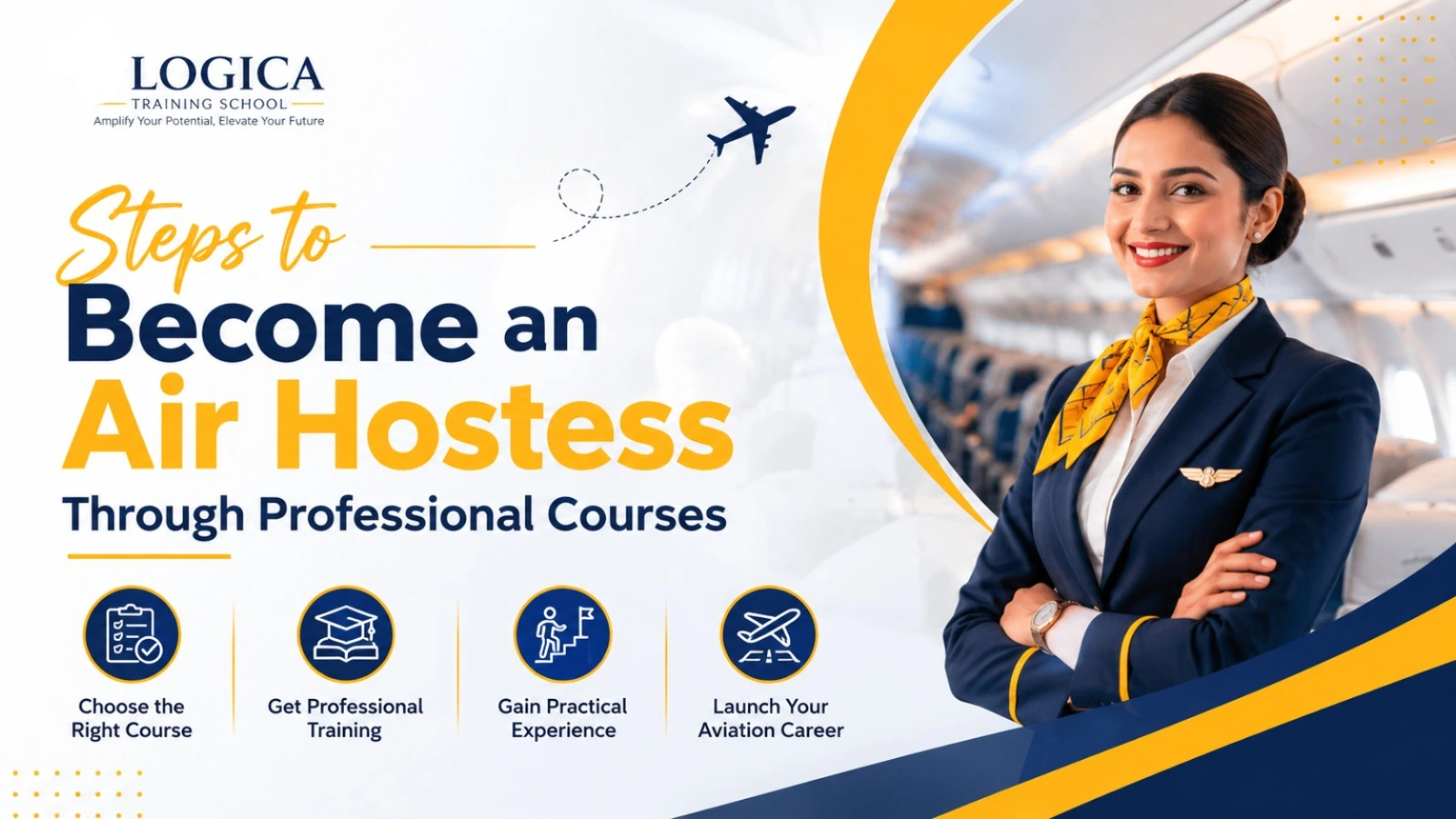
Introduction
The aviation industry is expanding faster than ever, creating exciting career opportunities for aspiring air hostesses. According to the International Air Transport Association (IATA), global air passenger traffic is expected to grow at an average rate of over 4% annually, driving strong demand for skilled cabin crew. Yet, many candidates struggle to understand where to start What qualifications are required? Which course is right? How do you actually get selected by airlines?
Becoming an air hostess is not just about glamour and travel; it requires professional training, strong communication skills, and the ability to handle real-time challenges at 30,000 feet. Without the right guidance, many applicants face rejection due to lack of preparation or awareness.
This blog solves that problem by giving you a clear, step-by-step roadmap to becoming an air hostess through professional courses. From eligibility and training options to career growth and salary insights, you’ll learn exactly how to turn your aviation dream into a successful career.
If you're planning to begin your journey, choosing the right aviation institute matters. Logica Training School’s aviation diploma courses in Chennai offer professional training designed specifically for aspiring cabin crew and aviation professionals.
Who is an Air Hostess?

An air hostess, also known as a cabin crew member, ensures passenger safety while delivering a comfortable and pleasant flying experience. She acts as the face of the airline, handling everything from welcoming passengers to managing in-flight emergencies.
Airlines don’t just hire for appearance they look for professionals who can manage people, solve problems quickly, and stay calm under pressure. According to industry estimates, a single cabin crew member may assist 50–100 passengers on a flight, which shows how important this role is.
Think about a long international flight. Passengers may feel anxious, tired, or even unwell. An air hostess steps in to guide them, serve meals, handle requests, and ensure everyone follows safety rules. For example, if a passenger feels sick mid-air, the air hostess provides first aid and coordinates with the crew.
In simple terms, an air hostess blends hospitality + safety + communication skills into one role. She creates a positive travel experience while staying alert to any risks. This balance makes the job both exciting and highly responsible.
For students who want structured practical training, enrolling in a professional cabin crew program through Logica Training School’s aviation academy can help build these real-world skills faster.
Roles and Responsibilities
An air hostess handles multiple tasks before, during, and after a flight. She doesn’t just serve food she ensures safety, comfort, and smooth communication throughout the journey.
Key Responsibilities
Conduct pre-flight safety checks
Welcome passengers and assist with seating
Demonstrate safety procedures
Serve food and beverages
Handle passenger queries and complaints
Manage emergencies and provide first aid
Ensure cleanliness and comfort onboard
Example in Real Life
Imagine a flight from Chennai to Dubai. A passenger feels anxious during turbulence. The air hostess calmly reassures them, explains safety measures, and ensures they feel comfortable. At the same time, she continues serving other passengers this shows multitasking in action.
Roles Breakdown Table
According to aviation data, cabin crew spend nearly 70% of their time on safety-related duties, even though passengers mostly notice the service aspect.
For official global aviation trends and airline industry insights, you can also explore the IATA Official Website.
Skills Required to Become an Air Hostess
To succeed as an air hostess, you need more than just a friendly smile. Airlines look for a mix of soft skills, physical fitness, and professional attitude.
Essential Skills
Communication Skills:
You must speak clearly and confidently. For example, you may need to explain safety instructions to international passengers.Customer Service Mindset:
Passengers expect polite and helpful behavior. A simple gesture like assisting a nervous traveler can improve their entire journey.Problem-Solving Ability:
Flights often bring unexpected situations. You may handle seat conflicts, delays, or medical issues quickly.Confidence and Grooming:
Airlines value well-groomed professionals who carry themselves confidently.Teamwork:
You work closely with pilots and other crew members. Coordination ensures smooth operations.Emotional Intelligence:
You deal with stressed or upset passengers. Staying calm and understanding emotions makes a big difference.
Example
If a child starts crying during a flight, a skilled air hostess doesn’t ignore it. She interacts with the child, comforts the parents, and resolves the situation calmly.
According to industry insights, recruiters shortlist candidates within minutes based on communication, confidence, and attitude, which shows how crucial these skills are.In short, the right skills turn you from a candidate into a professional air hostess ready for the skies.
Why Choose a Career as an Air Hostess?

An air hostess career offers a unique mix of travel, lifestyle, and professional growth that few jobs can match. The aviation industry continues to expand rapidly. According to industry reports, global passenger traffic grows at over 4% annually, which creates consistent demand for trained cabin crew.
If you enjoy interacting with people, exploring new places, and working in a dynamic environment, this career fits perfectly. Unlike traditional 9 - 5 jobs, every day feels different. One day you may fly from Chennai to Singapore, and the next day you could land in Dubai or London.
Airlines also reward talent quickly. Many air hostesses move into senior roles within 3 - 5 years. For example, a fresher may start as a junior cabin crew member and later become a cabin supervisor or trainer.
Here’s why many candidates choose this path:
Opportunity to travel internationally
Fast-paced and exciting work environment
Attractive salary and benefits
Strong career growth opportunities
Exposure to different cultures and people
For global airline career insights and professional standards, many aspirants also refer to ICAO Official Website.
Benefits of the Profession
An air hostess career offers more than just a job it delivers a lifestyle filled with opportunities, growth, and global exposure.
Key Benefits
Travel the World: Visit multiple countries without spending on travel
Attractive Salary: Entry-level salaries range between 25,000–50,000/month, with rapid growth
Cultural Exposure: Interact with people from different nationalities
Career Growth: Promotions happen faster compared to many industries
Additional Perks: Free tickets, accommodation, and allowances
Example
Imagine flying to Paris for work and spending your layover exploring the city all while earning a salary. That’s a regular experience for many air hostesses.
Benefits Breakdown Table
According to aviation insights, airline employees often receive discounted or free tickets for family, which adds huge personal value.
In short, this career combines income, lifestyle, and personal growth in a way few professions can offer.
H3: Challenges You Should Know
While the air hostess career looks glamorous, it comes with real challenges. Understanding them helps you prepare better and succeed in the long run.
Common Challenges
Irregular Working Hours: Flights operate 24/7, so you may work nights, weekends, and holidays
Physical Fatigue: Long hours, time zone changes, and standing for extended periods can be tiring
Time Away from Family: Frequent travel means missing festivals or personal events
Handling Difficult Passengers: Not every passenger stays polite or cooperative
High Responsibility: You must manage safety during emergencies
Example
During a delayed flight, passengers may become frustrated. An air hostess must stay calm, communicate clearly, and manage the situation without escalating tension.
Reality Check
Cabin crew often work 8 - 14 hour shifts, especially on international routes. You need strong physical stamina and mental resilience to handle this routine.
However, these challenges also build confidence, discipline, and emotional strength. Many professionals say the experience makes them more adaptable and independent.
If you stay prepared and train well, you can handle these challenges and still enjoy a successful and exciting aviation career.
Eligibility Criteria to Become an Air Hostess

Before you start your journey as an air hostess, you must meet certain eligibility criteria set by airlines and aviation institutes. These requirements ensure you can handle the responsibilities of safety, service, and communication effectively.
Most airlines follow similar standards across the industry. Thousands of candidates apply every year, but only a small percentage get shortlisted. Recruiters screen candidates based on education, physical fitness, and communication skills within minutes.
Here are the key eligibility factors:
Minimum educational qualification (usually 10+2)
Age limit (generally 18-27 years)
Height and weight proportion
Strong communication skills
Good physical and mental health
Example
If you complete your 12th grade and enroll in a professional cabin crew course, you already meet the basic eligibility. However, if you lack communication skills or confidence, airlines may reject your application despite meeting academic requirements.
Airlines don’t look for perfection they look for trainable, confident, and presentable candidates. When you understand these criteria early, you can prepare better and increase your chances of selection.
Students can directly apply for admission through the Logica Training School online application page and begin their aviation career preparation early.
Educational Qualification
Education plays a key role in starting your air hostess career, but you don’t need a highly advanced degree. Most airlines accept candidates who have completed their 10+2 (higher secondary education) from a recognized board.
However, candidates who pursue aviation-related courses gain a strong advantage during interviews. Professional training helps you understand real-world airline operations, safety procedures, and customer service.
Accepted Qualifications
10+2 (any stream: Science, Commerce, or Arts)
Diploma in Cabin Crew or Aviation
Degree in Aviation, Hospitality, or Tourism (optional but beneficial)
Example
Two candidates apply for the same airline job:
Candidate A: Completed only 12th grade
Candidate B: Completed 12th + cabin crew training
Recruiters often prefer Candidate B because she already understands grooming standards, safety drills, and passenger handling.
According to industry trends, candidates with aviation training have 30 - 40% higher chances of getting shortlisted compared to those without training.
You don’t need to wait until graduation. Many successful air hostesses start right after 12th by joining professional courses and building relevant skills early.
Age, Height & Physical Requirements
Airlines set specific physical standards to ensure cabin crew can perform duties efficiently and maintain a professional appearance.
Age Requirements
Minimum age: 18 years
Maximum age: Usually 26-27 years (varies by airline)
Height Requirements
Minimum height: Around 155-160 cm for females
Arm reach matters more than height in some airlines
Physical Fitness
Proportionate weight according to height
Clear skin and good grooming
No visible tattoos (in most cases)
Good eyesight (corrected vision allowed)
Example
An air hostess must reach overhead compartments easily to assist passengers. That’s why airlines focus on height and arm reach instead of just appearance.
Cabin crew also work long hours sometimes 8-14 hour shifts so physical stamina becomes essential. For instance, serving passengers, standing for long periods, and handling emergencies require strength and endurance.
Airlines don’t expect you to look like a model, but they expect you to maintain fitness, hygiene, and a professional appearance. With proper diet, exercise, and grooming habits, most candidates can meet these standards.
Language & Communication Requirements
Strong communication skills can make or break your chances of becoming an air hostess. Airlines prioritize candidates who can speak clearly, confidently, and professionally.
Language Requirements
Fluency in English (mandatory)
Knowledge of Hindi or regional languages (preferred)
Additional foreign languages (bonus advantage)
Why Communication Matters
Air hostesses interact with passengers from different countries and backgrounds. You must give clear instructions, especially during safety demonstrations or emergencies.
Example
Imagine a passenger who doesn’t understand safety instructions. A skilled air hostess simplifies the message and ensures the passenger follows it correctly. That’s effective communication in action.
Key Communication Skills
Clear pronunciation and tone
Active listening
Confidence while speaking
Positive body language
Recruiters often assess communication skills within the first 2-3 minutes of interaction. A confident introduction can create a strong first impression.
You don’t need a foreign accent. You just need clarity, confidence, and the ability to connect with people. With regular practice, mock interviews, and training, you can easily improve your communication skills and stand out during airline selection.
Conclusion
A career as an air hostess offers much more than travel and glamour it gives you a chance to build a dynamic, well-paying, and globally respected profession. From meeting eligibility criteria to choosing the right professional course, every step you take brings you closer to a rewarding aviation career. With the industry growing steadily and airlines constantly hiring skilled cabin crew, this is the perfect time to start your journey.
However, success doesn’t happen by chance. You need the right training, strong communication skills, proper grooming, and confidence to stand out in competitive airline selections. Many aspiring candidates miss opportunities simply because they lack guidance or professional preparation.
That’s why choosing the right training institute is important. With expert faculty, practical sessions, and placement support, Logica Training School helps students transform their aviation dreams into successful careers.
FAQs
1. What qualifications do I need to become an air hostess?
You need to complete at least 10+2 (any stream) from a recognized board. Many candidates also join cabin crew or aviation courses to improve their chances of selection.
2. Can I become an air hostess after 12th?
Yes, you can start right after 12th. Many students enroll in professional aviation courses and apply for airline jobs without waiting for a degree.
3. What is the age limit for air hostess jobs?
Most airlines accept candidates between 18 to 26 or 27 years, though this may vary slightly depending on the airline.
4. Is height important for becoming an air hostess?
Yes, airlines usually require a minimum height of 155-160 cm. However, arm reach and overall personality also play an important role.Yes, airlines usually require a minimum height of 155-160 cm. However, arm reach and overall personality also play an important role.
5. Do I need a degree to become an air hostess?
No, a degree is not mandatory. However, a diploma or certification in aviation can give you a competitive advantage during recruitment.
6. What is the starting salary of an air hostess in India?
Freshers typically earn between ₹25,000 to ₹50,000 per month, with additional allowances and travel benefits.
7. Which course is best for becoming an air hostess?
Courses like Diploma in Cabin Crew Training, Aviation & Hospitality Management, or certification programs in aviation are highly recommended.
8. Do airlines provide training after selection?
Yes, once selected, airlines provide intensive training on safety procedures, emergency handling, and in-flight service.
9. Is the air hostess job safe for women?
Yes, airlines follow strict safety protocols and provide secure working environments, making it a safe and respected career for women.
10. How long does it take to become an air hostess?
It usually takes 6 months to 1 year if you enroll in a professional course and complete the airline selection process successfully.