
Introduction
Dreaming of becoming an air hostess but unsure which course to choose or how to start? Many students face confusion around eligibility, fees, and career scope-often delaying their entry into a fast-growing industry. The aviation sector is expanding rapidly, and the demand for skilled cabin crew is rising every year.
According to the International Air Transport Association (IATA), global passenger traffic is projected to grow at an average of 3.8% annually, creating continuous demand for trained professionals. In India, the Ministry of Civil Aviation reports over 190 million domestic passengers annually, highlighting strong industry growth and hiring needs.
This guide will help you: Understand air hostess courses, eligibility, and duration, Compare top institutes and fee structure, Explore career opportunities and salary insights
If you're looking for professional aviation training, Logica Training School offers specialized cabin crew and aviation programs designed for aspiring air hostesses.
Skills You Will Learn in Air Hostess Training
Air hostess training focuses on building real-world skills that airlines expect from day one. You won’t just study theory-you will practice how to handle passengers, manage emergencies, and deliver top-class service with confidence.
Key Skills You Will Learn:
Communication Skills:
You learn how to speak clearly, confidently, and politely with passengers from different backgrounds.
Example: Explaining safety instructions during takeoff in a calm and professional tone.Customer Service Excellence:
You develop the ability to handle requests, complaints, and special needs efficiently.
Example: Assisting elderly passengers or managing a delayed flight situation.Grooming and Personality Development:
You build a polished appearance, body language, and etiquette that match airline standards.Emergency and Safety Management:
You train for real-life situations like turbulence, fire, or medical emergencies.
Example: Performing first aid or guiding passengers during an evacuation.Teamwork and Coordination:
You learn to work closely with pilots and fellow crew members to ensure smooth operations.Problem-Solving Skills:
You think quickly and handle unexpected challenges without panic.
Students can strengthen these practical skills through professional programs available at Logica Training School Aviation Courses.
What Are Air Hostess Courses?

Air hostess courses prepare you for a career as cabin crew by combining practical training with personality development. Airlines don’t just hire candidates with academic knowledge-they look for confident, well-groomed professionals who can handle passengers, ensure safety, and deliver excellent service at 35,000 feet.
The aviation industry continues to grow rapidly. According to the International Air Transport Association (IATA), global air travel demand is expected to grow at 3.8% annually, which directly increases the need for trained cabin crew. In India alone, millions of passengers fly every year, creating strong hiring demand across domestic and international airlines.
These courses focus on both technical skills and soft skills, including:
In-flight safety procedures and emergency handling
Communication and customer service skills
Grooming, etiquette, and personality development
First aid and crisis management
Air hostess courses act as your entry point into aviation, helping you transition from a student to a job-ready professional. Whether you aim to work with airlines like IndiGo or Emirates, the right course builds your confidence, skills, and industry exposure.
Definition and Course Overview
Air hostess courses are specialized training programs designed to prepare candidates for cabin crew roles in airlines. These programs focus on safety, service, and professionalism, which form the core of aviation careers.
Unlike regular academic courses, these programs emphasize hands-on training and real-world scenarios. You don’t just study-you actively practice situations you will face on flights.
What You Learn in an Air Hostess Course:
Aircraft safety procedures and emergency protocols
Passenger handling and conflict resolution
Grooming standards and body language
First aid and medical assistance
Communication skills (often including basic foreign languages)
Example:
A student training in Chennai might attend mock flight sessions where instructors simulate real cabin situations like turbulence or medical emergencies.
Types of Air Hostess Courses
You can choose from different types of air hostess courses based on your career goals, time, and budget. Each course offers a different level of depth and specialization.
1. Certificate Courses (Short-Term)
Duration: 3-6 months
Best for quick entry into aviation
Focus on basic grooming and communication
Example: A 6-month certificate course helps you quickly apply for entry-level cabin crew roles.
2. Diploma Courses
Duration: 6-12 months
More detailed training in safety and service
Includes practical exposure and mock drills
Example: Diploma students often receive placement assistance from institutes.
3. Degree Programs (Aviation/Hospitality)
Duration: 3 years
Covers aviation management, hospitality, and business skills
Ideal for long-term career growth
Comparison Table of Course Types:
Key Takeaways:
Choose certificate courses for speed
Choose diplomas for balanced training
Choose degrees for long-term growth
Each option leads to aviation careers, but your choice should match your time, budget, and career ambition.
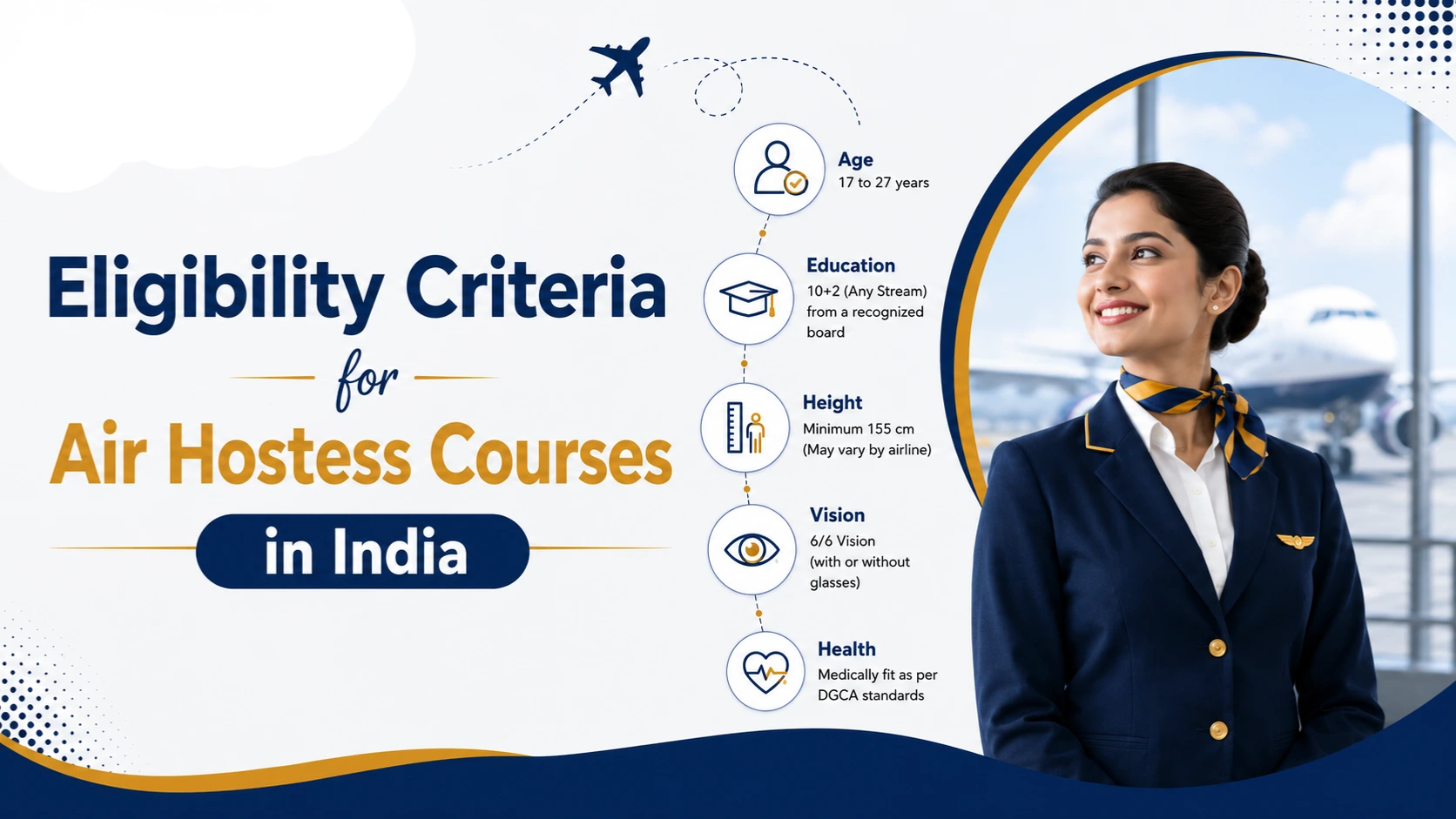
Eligibility Criteria for Air Hostess Courses

Before you apply for air hostess courses, you need to meet a few basic eligibility criteria. Don’t worry-the requirements stay simple and student-friendly, which makes aviation accessible to many aspirants right after school.
Most institutes accept candidates who have completed 10+2 from any recognized board. You don’t need a specific stream-students from science, commerce, or arts can apply. However, strong communication skills and confidence give you an advantage during admission interviews.
Basic Eligibility Requirements:
Minimum qualification: 10+2 (any stream)
Age: Usually between 17 to 26 years
Language skills: Good English (knowing Hindi or other languages helps)
Medical fitness: Physically fit with no major health issues
Example:
Students can directly apply through the Logica Training School Online Application Page to begin their aviation career journey.
According to aviation industry trends, airlines prioritize personality, communication, and grooming over academic scores. So even if you scored average marks, you can still build a strong career with the right training.
In short, if you have the right attitude, basic education, and willingness to learn, you already meet the core eligibility criteria.
Age Limit and Physical Requirements
Airlines look for candidates who meet specific age and physical standards because cabin crew roles demand energy, alertness, and a professional appearance. These requirements ensure you can handle long flights, assist passengers, and respond quickly during emergencies.
Age Limit:
Most institutes and airlines accept candidates between 17 and 26 years. Some international airlines extend the upper limit to 30+ for experienced candidates.
Physical Requirements:
Minimum height:
Female: 155-160 cm
Male: 170 cm (varies by airline)
Weight: Proportionate to height
Vision: Normal eyesight (corrected vision allowed in many cases)
Skin: Clear complexion (basic grooming standards matter)
Fitness: No major medical conditions
Example:
If you are 19 years old, 158 cm tall, and physically fit, you meet the criteria for most training institutes and domestic airlines.
Airlines also check your BMI (Body Mass Index) to ensure you maintain a healthy physique. You don’t need to look like a model-you need to appear fit, confident, and well-groomed.
These standards may vary slightly across airlines, but consistent grooming and fitness always improve your chances of selection.
Skills Required to Become an Air Hostess
Airlines don’t just hire based on qualifications-they select candidates who demonstrate strong interpersonal and professional skills. You need to handle passengers, solve problems, and stay calm under pressure.
Essential Skills You Must Develop:
Excellent communication skills
Confidence and positive attitude
Customer service mindset
Problem-solving ability
Teamwork and coordination
Emotional control under stress
Example:
Imagine a passenger panicking during turbulence. You must stay calm, reassure them, and follow safety procedures confidently.
Skills Breakdown Table:
Challenges in the Air Hostess Career

An air hostess career looks glamorous from the outside, but it also comes with real challenges. You need to prepare mentally and physically before entering this field.
Common Challenges You Will Face:
Irregular Working Hours:
Flights operate 24/7, so you may work night shifts, early mornings, or long-haul schedules.
Example: A Dubai flight may require reporting at 2 AM.Physical and Mental Fatigue:
Long hours standing, walking, and assisting passengers can feel exhausting. Jet lag also affects your sleep cycle.Handling Difficult Passengers:
Not every passenger stays polite. You must stay calm and professional under pressure.
Example: Managing complaints during flight delays or cancellations.Time Away from Family:
Frequent travel means missing festivals, events, or weekends at home.Strict Grooming Standards:
Airlines expect consistent appearance, posture, and discipline.
Despite these challenges, many professionals stay in this career because of travel opportunities, high salary, and global exposure. If you stay disciplined and adaptable, you can handle these challenges successfully.
For official aviation regulations and global standards, many aspirants also refer to ICAO Official Website.
Cost-Effective Education
One of the biggest advantages of pursuing air hostess courses-especially in cities like Chennai-is affordability. Compared to metro cities like Mumbai or Delhi, you can access quality training at a lower cost without compromising on education.
Why It’s Cost-Effective:
Lower tuition fees compared to Tier-1 cities
Affordable accommodation and living expenses
Flexible course options (short-term certificates to diplomas)
Typical Fee Range:
Certificate courses: ₹50,000 - ₹1,50,000
Diploma courses: ₹1,00,000 - ₹3,00,000
Example:
A student in Chennai can complete a 6-month diploma course for around ₹1.2 lakh, while a similar program in Mumbai may cost significantly more.
Additional Benefits:
Many institutes offer installment payment options
Some provide placement assistance, which increases ROI
Short-term courses help you start earning faster
Choosing a cost-effective course allows you to reduce financial pressure while still gaining industry-ready skills.
Growing Aviation Industry in South India
South India, especially cities like Chennai, Bengaluru, and Hyderabad, is witnessing rapid growth in the aviation sector. This expansion creates more job opportunities for trained cabin crew and ground staff.
According to industry reports, India’s aviation sector continues to grow steadily, with increasing passenger traffic and new airport developments across southern states.
Key Growth Drivers:
Expansion of regional airports under UDAN scheme
Increased domestic and international flight routes
Rising middle-class population choosing air travel
What This Means for You:
More airline hiring in South India
Increased demand for trained aviation professionals
Better career opportunities closer to home
Example:
Chennai International Airport handles millions of passengers annually, which creates demand for ground staff, customer service executives, and cabin crew.
Opportunities in the Region:
Domestic airlines expanding routes
International carriers hiring Indian crew
Growth in airport operations and hospitality roles
If you train in South India, you position yourself in a high-growth region, which improves your chances of landing a job quickly after completing your course.
Career Opportunities After Air Hostess Courses
Air hostess courses open doors to a wide range of career opportunities in the aviation and hospitality industries. You don’t need to limit yourself to becoming a cabin crew member-these courses build transferable skills that airlines, airports, and global service brands actively seek.
The aviation sector continues to expand rapidly. India aims to become the third-largest aviation market globally, and airlines keep adding new routes and aircraft. This growth directly increases demand for trained professionals across multiple roles.
Career Paths You Can Explore:
Cabin Crew (Domestic & International Airlines)
Ground Staff at Airports
Customer Service Executive
Guest Relations Officer in hotels
Aviation Trainer (with experience)
Example:
A student who completes a diploma course can start as ground staff, gain experience, and later transition into an international cabin crew role.
Air hostess training also prepares you for global opportunities. Many professionals move to international airlines after gaining 1-2 years of experience in India.
In short, this career path offers flexibility, growth, and international exposure, making it one of the most exciting options after 12th.
Job Roles
After completing an air hostess course, you can choose from multiple job roles depending on your skills, interests, and career goals. Each role focuses on customer interaction, safety, and service excellence.
Popular Job Roles:
Cabin Crew (Air Hostess/Flight Steward): Manage passenger safety and comfort during flights
Ground Staff: Handle check-in, boarding, and passenger queries at airports
Customer Service Executive: Assist travelers with bookings and support
Guest Relations Executive: Work in hotels and luxury service industries
Flight Attendant Trainer: Train future cabin crew (with experience)
Example:
You might start as ground staff at an airport in Chennai, gain experience, and later move into a cabin crew role with a domestic airline.
Job Roles Comparison Table:
Key Insight:
Cabin crew roles offer higher salaries and travel perks, while ground roles provide stable schedules and local job options.
Top Recruiters
Top airlines and aviation companies actively hire candidates who complete professional air hostess training. Recruiters look for candidates with strong communication skills, grooming, and customer service experience.
Leading Recruiters in Aviation:
IndiGo
Air India
SpiceJet
Vistara
Emirates
Qatar Airways
Example:
Many students start their careers with IndiGo or Air India and later move to international airlines like Emirates for higher salaries and global exposure.
Recruiters Comparison Table:
Key Insight:
Domestic airlines help you gain experience quickly, while international airlines offer higher pay, travel benefits, and career prestige.
With the right training and skills, you can secure opportunities with top recruiters and build a long-term career in aviation.
Conclusion:
Choosing the right career after 12th can feel overwhelming, especially when you face too many options and too little clarity. Air hostess courses simplify that decision by offering a clear, structured path into one of the most exciting and fast-growing industries in the world. If you enjoy interacting with people, love travel, and want a dynamic work environment, aviation gives you exactly that.
Throughout this guide, you explored everything-from eligibility criteria and course types to fees, skills, career opportunities, and top recruiters. The key takeaway is simple: you don’t need extraordinary academic scores to succeed in this field. Airlines look for confidence, communication skills, and a professional attitude. With the right training, you can build all of these.
The aviation industry continues to expand rapidly, especially in India. New airports, increased flight routes, and rising passenger demand create consistent job opportunities for trained cabin crew and ground staff. This growth means one thing for you-more chances to enter and grow in the industry.
However, your success depends on the choices you make today. Selecting the right institute, focusing on skill development, and staying consistent with grooming and communication practice can significantly improve your chances of getting hired.
That’s why choosing the right institute matters. With expert faculty, practical sessions, and placement support, Logica Training School helps students transform aviation dreams into successful careers.
FAQs
What qualification is required for air hostess courses?
Candidates must complete 10+2 from a recognized board, with good communication skills and personality.What is the duration of air hostess courses?
Courses typically range from 3 months to 3 years depending on the program type.What are the fees for air hostess training in India?
Fees range between ₹50,000 and ₹6,00,000 based on course level and institute.Can I become an air hostess after 12th?
Yes, most certificate and diploma courses accept students after 12th.Is air hostess a good career option?
Yes, it offers high salary, travel opportunities, and global exposure.What is the salary of an air hostess in India?
Freshers earn around ₹25,000-₹50,000 per month, while experienced professionals earn up to ₹2 lakh.Are there entrance exams for air hostess courses?
Most institutes conduct interviews and aptitude tests instead of formal exams.