
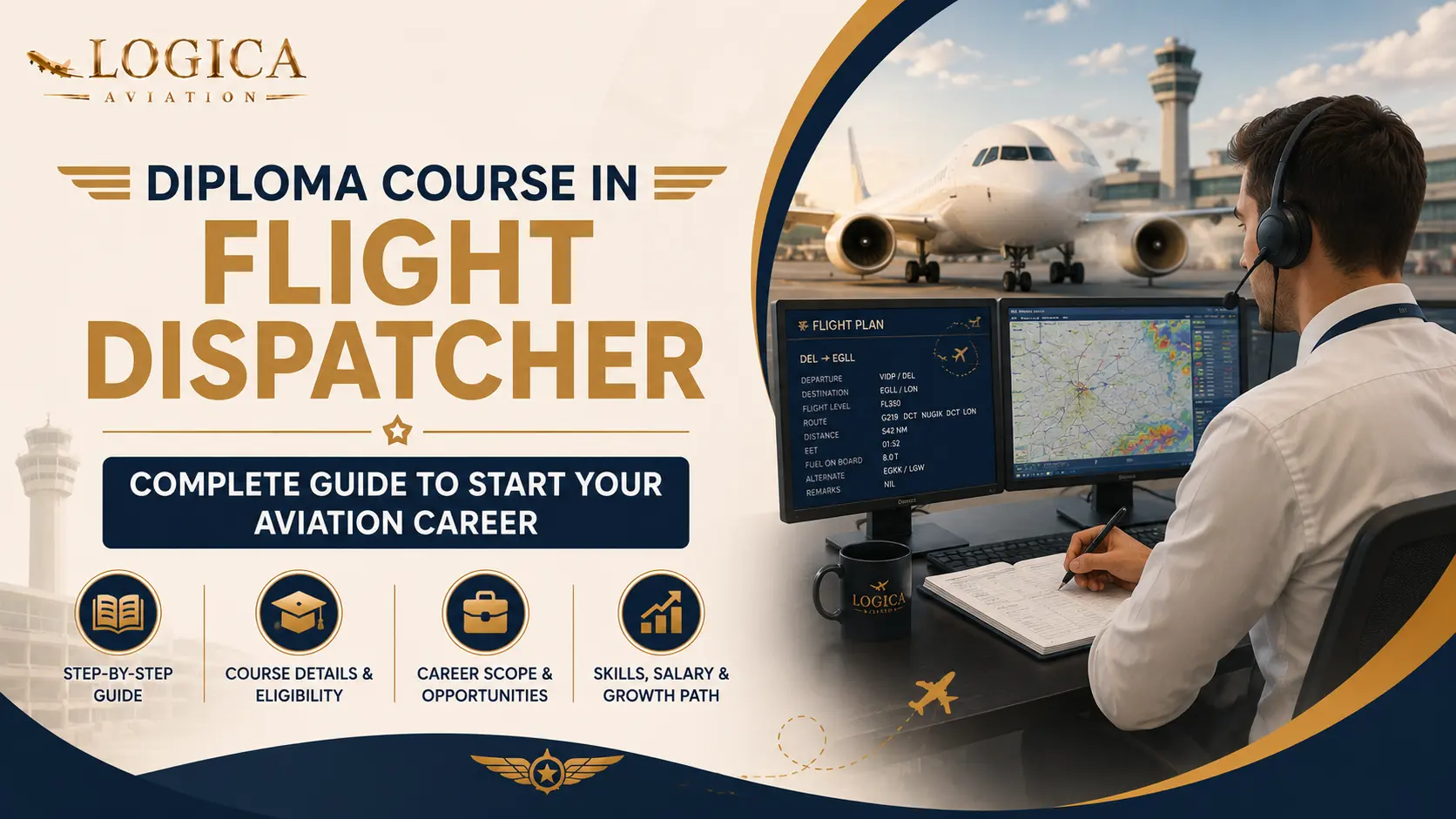
The aviation industry is growing rapidly, but most students only think about becoming pilots or cabin crew. They often miss out on high-demand ground roles like flight dispatchers the professionals who plan, monitor, and ensure every flight operates safely and efficiently. According to the International Air Transport Association (IATA), global air passenger traffic is expected to grow at over 4% annually, increasing the need for skilled aviation operations staff. However, many aspiring candidates don’t know how to enter this field, what qualifications they need, or which course to choose. This confusion leads to missed opportunities in a career that offers stability, strong salaries, and growth. A Diploma Course in Flight Dispatcher provides the right entry point. In this guide, you’ll learn everything from eligibility and course details to career scope and salary so you can confidently start your aviation journey.
Who is a Flight Dispatcher?

A flight dispatcher plays a critical role in airline operations by planning, monitoring, and supporting flights from the ground. While pilots fly the aircraft, dispatchers ensure every flight operates safely, efficiently, and on schedule. You can think of them as the “brain behind the flight plan.”
Before a flight takes off, a dispatcher analyzes weather conditions, calculates fuel requirements, selects the safest route, and prepares a detailed flight plan. During the journey, they stay in constant communication with pilots and update them about weather changes, delays, or alternate routes.
According to aviation industry insights, airlines rely heavily on dispatchers to manage operational risks and reduce delays. A single dispatcher may handle multiple flights in a shift, which shows how important their role is in keeping airline operations smooth.
Example
Imagine a flight from Chennai to Delhi facing unexpected bad weather. The dispatcher quickly suggests an alternate route, adjusts fuel calculations, and coordinates with the pilot. This quick decision ensures passenger safety and avoids major disruptions.
In simple terms, a flight dispatcher combines technical knowledge + decision-making + real-time coordination to keep flights safe and efficient.
Roles and Responsibilities
A flight dispatcher handles multiple responsibilities before and during a flight. Their work directly impacts safety, fuel efficiency, and on-time performance.
Key Responsibilities
Plan flight routes based on weather and air traffic
Calculate fuel requirements and aircraft weight balance
Analyze weather reports and forecasts
Prepare and release flight plans
Monitor flights in real time
Communicate with pilots and airline operations teams
Suggest alternate routes during emergencies
Example in Action
If heavy rain affects a route, the dispatcher immediately updates the pilot with a safer path and ensures enough fuel for the change.
Roles Breakdown Table
Studies show that efficient dispatching can reduce fuel costs by up to 5–10%, which saves airlines millions annually.
Importance of Flight Dispatchers in Aviation
Flight dispatchers play a vital role in ensuring aviation safety and operational efficiency. Without them, airlines would struggle to manage flight planning, delays, and risk assessment effectively.
Why Flight Dispatchers Matter
Ensure flight safety through proper planning
Reduce delays with efficient route management
Optimize fuel usage and lower costs
Provide real-time support to pilots
Maintain compliance with aviation regulations
Example
During extreme weather conditions, dispatchers help pilots decide whether to delay, reroute, or divert a flight. This decision can prevent accidents and ensure passenger safety.
Importance Breakdown Table
According to aviation data, dispatchers significantly improve operational efficiency by minimizing delays and optimizing routes.
In short, flight dispatchers act as the control center of airline operations, ensuring every flight stays safe, efficient, and well-coordinated.
What is a Diploma Course in Flight Dispatcher?

A Diploma Course in Flight Dispatcher trains you to plan, manage, and monitor flights from the ground. Instead of flying the aircraft, you control the entire operation behind the scenes-route planning, fuel calculation, weather analysis, and coordination with pilots.
This course focuses on both theoretical knowledge and practical training. You learn how airlines operate and how to make real-time decisions that impact safety and efficiency. Most programs run between 6 months to 1 year, depending on the institute and training depth.
Airlines depend heavily on trained dispatchers to reduce delays and optimize fuel usage. Industry estimates show that efficient flight planning can cut operational costs by up to 5-10%, which highlights the value of skilled professionals in this role.
Example
If a storm affects a planned route, a trained dispatcher quickly redesigns the flight path, adjusts fuel requirements, and communicates with the pilot. This quick action ensures safety and avoids costly delays.
In short, this diploma acts as your entry point into airline operations, equipping you with the skills to manage flights safely and efficiently.
Course Overview
The Diploma Course in Flight Dispatcher gives you a structured pathway into aviation operations. You don’t just learn theory, you practice real-world flight planning and decision-making.
What You’ll Learn
Flight planning and route optimization
Weather analysis and interpretation
Fuel calculation and aircraft performance
Aviation regulations and safety standards
Communication with pilots and operations teams
Training Components
Classroom sessions for core concepts
Simulator-based training for real scenarios
Case studies on real flight situations
Practical exposure to airline operations
Example
During training, you may receive a scenario where a flight faces bad weather. You must create an alternate route and calculate fuel-just like a real dispatcher.
Course Overview Table
Most students complete the course and become job-ready within a year, making it one of the fastest ways to enter the aviation industry.
Subjects Covered in the Course
The diploma course covers a mix of technical and operational subjects that prepare you for real airline environments. Each subject focuses on a critical part of flight operations.
Core Subjects
Meteorology:
You learn how weather affects flights. For example, you analyze storms, turbulence, and wind patterns to choose safe routes.Air Navigation:
This subject teaches you how aircraft move from one point to another using navigation systems and maps.Flight Planning:
You calculate routes, fuel needs, and timing. For instance, you decide the most efficient path between Chennai and Mumbai.Aviation Regulations:
You study rules set by aviation authorities to ensure safety and compliance.Aircraft Performance:
You understand how weight, fuel, and weather impact aircraft performance.
Example
If strong headwinds affect a flight, you use your knowledge of meteorology and flight planning to adjust the route and fuel.
Most courses dedicate 60-70% of training to practical applications, which helps you build real-world skills quickly.
By the end of the course, you don’t just understand concepts, you know how to apply them in real flight situations, which makes you job-ready for airline operations.
Eligibility Criteria for Flight Dispatcher Course

Before you enroll in a flight dispatcher course, you need to meet a few basic eligibility requirements. These criteria ensure you can handle the technical, analytical, and decision-making aspects of aviation operations.
Most aviation institutes keep the entry requirements simple, but airlines expect strong practical skills later. Every year, thousands of students apply for aviation courses, yet only those who build the right foundation succeed in this field.
Basic Eligibility Requirements
Minimum educational qualification (10+2)
Basic understanding of Maths and logical reasoning
Good communication skills
Strong interest in aviation operations
Example
If you completed your 12th grade with basic Maths knowledge and strong problem-solving skills, you already meet the core eligibility. However, if you struggle with numbers or analysis, you may find flight planning tasks challenging.
Unlike pilot training, you don’t need expensive licenses to start. This makes the flight dispatcher course a cost-effective and accessible entry point into aviation.
Institutes don’t just look at marks, they look for interest, aptitude, and willingness to learn. When you understand these criteria early, you can prepare better and choose the right training path.
Educational Qualification
You don’t need a complex academic background to join a flight dispatcher course. Most institutes accept students who complete their 10+2 (higher secondary education) from a recognized board.
However, your subject choice can give you an advantage.
Preferred Qualifications
10+2 with Mathematics and Physics (highly recommended)
10+2 from any stream (accepted by many institutes)
Diploma or degree in aviation (optional but beneficial)
Why Maths Matters
Flight dispatchers calculate fuel, analyze routes, and interpret data daily. Basic mathematical understanding helps you perform these tasks accurately.
Example
Imagine you need to calculate fuel for a flight from Chennai to Delhi. You must consider distance, weather, and aircraft weight. Without basic Maths skills, this task becomes difficult.
Industry Insight
Training institutes report that students with Maths backgrounds adapt 30-40% faster during technical modules compared to others.
That said, you don’t need to be a topper. Even if you come from a non-science background, you can succeed by learning basic concepts during training.
In short, education opens the door, but your learning ability and practice determine your success.
Age Limit
The flight dispatcher course offers flexibility when it comes to age, which makes it accessible to a wide range of candidates.
Typical Age Criteria
Minimum age: 17-18 years
No strict upper age limit (varies by institute)
Most students start right after completing their 12th grade, but many also switch careers and join later.
Example
A student who finishes school at 18 can immediately enroll and start building a career in aviation operations. At the same time, a graduate at 22 can also join and transition into this field without any issue.
Unlike cabin crew roles, airlines don’t impose strict age restrictions for flight dispatchers. Skills and knowledge matter more than age in this career path.
Why Age Flexibility Helps
Allows early career start after 12th
Supports career switchers
Gives more time for skill development
Reality Check
Most companies prefer candidates who complete training early and gain experience quickly. Starting between 18-24 years often gives you better long-term growth opportunities.
In short, you don’t need to worry much about age. Focus on building your skills and gaining practical knowledge that matters more than numbers.
Skills & Aptitude Required
To succeed as a flight dispatcher, you need a strong mix of analytical thinking, decision-making, and communication skills. Airlines don’t just look at qualifications they look for candidates who can handle real-time pressure.
Essential Skills
Analytical Thinking:
You must analyze weather data, routes, and fuel calculations quickly.Attention to Detail:
A small mistake in flight planning can cause major issues.Decision-Making Skills:
You must choose the best route or solution under time pressure.Communication Skills:
You coordinate with pilots and operations teams clearly and confidently.Time Management:
Flights run on strict schedules, so you must work efficiently.
Example
If sudden turbulence affects a route, you must quickly analyze alternatives and inform the pilot. A delay in decision-making can impact the entire flight schedule.
Industry Insight
Aviation recruiters often shortlist candidates based on problem-solving ability and confidence during practical assessments.
You don’t need to master everything from day one. Training programs help you develop these skills through simulations and real-world scenarios.
In simple terms, if you enjoy solving problems, working with data, and making quick decisions, this career can be a perfect fit for you.
Conclusion
A Diploma Course in Flight Dispatcher opens the door to one of the most important yet underrated careers in aviation. While pilots fly the aircraft, dispatchers ensure every flight operates safely, efficiently, and on time. With the aviation industry expanding steadily, airlines continue to seek skilled professionals who can manage flight operations behind the scenes.
This career offers a strong combination of stability, growth, and technical expertise without the high cost of pilot training. From learning flight planning and weather analysis to gaining real-time decision-making skills, this diploma equips you with everything you need to enter airline operations confidently. However, your success depends on the quality of training and how well you build your practical skills. Many candidates miss opportunities because they lack proper guidance or industry exposure.
FAQs
1. What is a diploma course in flight dispatcher?
A diploma course in flight dispatcher trains you to plan, monitor, and manage flight operations, including route planning, fuel calculation, and weather analysis.
2. Who can apply for a flight dispatcher course?
Anyone who has completed 10+2 (any stream) from a recognized board can apply. A background in Maths or Physics helps but is not mandatory.
3. What is the duration of the flight dispatcher course?
Most diploma courses last between 6 months to 1 year, depending on the institute and training structure.
4. Is Maths compulsory for this course?
Maths is not always mandatory, but basic mathematical skills are important for fuel calculations and flight planning tasks.
5. What is the salary of a flight dispatcher in India?
Freshers usually earn between 25,000 to 50,000 per month, while experienced professionals can earn 70,000 to 1,50,000+ per month.
6. Is flight dispatcher a good career option?
Yes, it offers strong career growth, job stability, and opportunities in airline operations without the high cost of pilot training.
7. Do flight dispatchers work in airlines only?
No, they can work in airlines, airport operations, aviation companies, and logistics firms related to aviation.
8. What skills are required to become a flight dispatcher?
You need analytical thinking, attention to detail, decision-making ability, and good communication skills.
9. Are there placement opportunities after the course?
Many reputed institutes offer placement assistance, internships, and interview preparation for airline roles.
10. Can I join a flight dispatcher course after 12th?
Yes, you can start immediately after completing your 12th grade, making it a fast entry into the aviation industry.